 Economiks
How to create a business plan: complete quide & free template
November 16, 2025Write a professional business plan with a detailed step-by-step guide and a free template. Learn how to present your idea, analyze the market, and def...

 Martina Veselinović
In a world where talent is often abundant yet unrealized, the ability to recognize one’s potential and turn it into tangible impact has become one of the defining challenges of our time. When individuals operate below their capabilities, the consequences extend beyond personal development to affect productivity, innovation, and overall economic growth. Ernest Akinlola understands this journey firsthand.
With a career shaped by bold decisions and continuous reinvention, Akinlola has spent nearly three decades leading businesses across telecommunications, technology, and energy sectors, primarily in the United Kingdom and Nigeria. He served as CEO of ntel and Telcoinabox, COO of Lycamobile Group, and as Managing Director, later becoming a Board Member at Bboxx Nigeria. As a founder of ventures such as Allumno and Right Instinct, he has also built businesses focused on digital transformation, business growth, and customer engagement.
Today, his work extends beyond corporate leadership. He actively mentors entrepreneurs, advises startups through global initiatives such as World Bank–supported programs, and supports professionals and leaders in navigating meaningful career transitions with greater clarity and purpose.
In this interview for Economiks, we speak with Ernest Akinlola about how individuals can identify their true potential and, more importantly, how they can transform it into reality. We also focus on the economic impact of underutilized human potential.
1.Today, many frameworks such as the concept of Ikigai, which is built around four key questions: what do you love, what are you good at, what does the world need, and what can you be paid for, aim to help people discover their potential. Do you believe such models are truly useful, and are there any tools or methods you would recommend for identifying one’s strengths and hidden potential?
There are many tools – books, coaching, personality tests like Myers-Briggs, but they should guide you, not define you. I also don’t fully agree with the strong focus on market demand or income in frameworks like Ikigai. Fulfillment comes from your inner drive, not just what the world needs. Many creators, like Pablo Picasso and Ludwig van Beethoven, followed their passion long before their work was recognized.
Expanding your perspective is equally important, through reading, travel, and new experiences. Ultimately, discovering your potential requires reflection and stillness. When you slow down, you begin to hear your inner voice more clearly, and that’s where the real answers are.
2. Our environment often shapes what we believe we are capable of. How can someone distinguish between their true potential and the limitations imposed by family, education systems, or social expectations?
In my case, I was expected to become an accountant. I followed that path, even qualified, but it never felt aligned. The turning point came when I stopped listening to external expectations and focused on what came naturally to me: working with people, creativity, and dynamic environments. That awareness is key, recognizing what feels natural to you versus what feels imposed.
One of the most important things is building self-belief and mental resilience. I grew up with a simple philosophy: there is no such thing as “can’t.” Not every limitation is yours, many reflect others’ fears.
Ultimately, discovering your potential means listening to yourself and having the courage to act. If something consistently draws you, it’s often a sign of where your true potential lies.
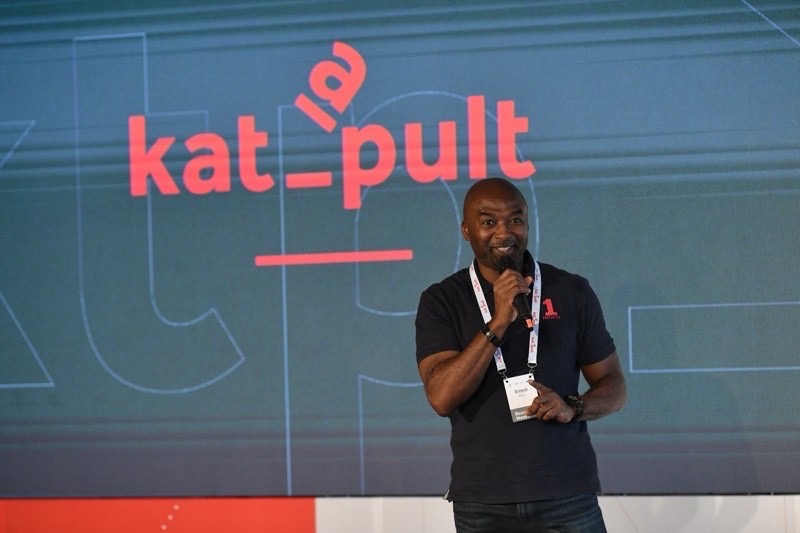
Ernest Akinlola – Source: Private archive
3.From an economic perspective, how much potential do societies lose when individuals never discover or develop their true strengths? Could unlocking human potential be one of the most underestimated drivers of economic growth?
According to the World Bank, suppressed human potential may have reduced global productivity by as much as 51%, meaning the world could be operating at only half of its true capacity. Much of this stems from limited access to education, mentorship, and opportunities.
Regions with young, fast-growing populations like parts of Africa, highlight how much untapped potential exists. With the right support systems, the impact could be transformative. Unlocking human potential is therefore one of the most underestimated drivers of economic growth, but it requires not just awareness, but systems that enable people to act on it.
4. Many people choose careers based on stability rather than alignment with their abilities. What are the long-term consequences, both for individuals and for the economy, when people work in roles that do not match their potential?
This has a direct impact on businesses and the broader economy. When individuals are in roles that don’t suit their strengths, the quality of their work is lower, innovation is limited, and overall performance declines. If this is multiplied across millions of people, the economic cost becomes substantial, companies grow slower, and markets become less competitive.
Another consequence is that many people end up building someone else’s vision rather than their own. Employment often becomes a transaction, time and skills exchanged for stability, while personal ambitions remain suppressed. Over time, this creates a gap between what people are capable of and what they actually contribute.
At the same time, it’s important to recognize that not everyone needs to become an entrepreneur. The key issue is not the type of career, but whether individuals are in environments where their potential is recognized, developed, and utilized. When that doesn’t happen, both the individual and the employer lose.
5. How important is mentorship in discovering and developing one’s potential? What would you recommend to young people seeking guidance or mentors?
One of the biggest mistakes people make is seeking validation from the wrong sources. When you have an idea, going around and asking friends, family, or colleagues for approval can often hold you back. Most people will respond based on their own limitations.
From my own experience, I learned that the real shift happens when you stop asking for permission and start seeking the right environment. If you want to grow, you need to surround yourself with people who are already where you want to be. If I wanted to move into a different role, I would put myself in that space, observe, learn, even volunteer if needed. That’s how you accelerate your development.
Mentorship is not just about formal programs, it’s about proximity to the right people. Sometimes, all it takes is one person to recognize your potential. For example, Novak Djokovic was noticed by his coach at a very young age, which played a crucial role in shaping his path. Many successful people have had that moment, someone who saw something in them before the world did.
At the same time, mentorship is also a responsibility of leaders. In my career, I’ve always made a conscious effort to identify and develop people. Before leaving one of my roles, I had already prepared my successor well in advance, mentoring and supporting her growth so she could step into the position with confidence. That’s what real leadership looks like, helping others grow.
6. In your view, why do most people never fully reach their potential? Do you believe there is a point in life when it becomes too late to discover one’s true potential?
Many also don’t explore their potential enough or don’t feel the need to. That’s why it’s crucial to surround yourself with people who encourage growth, not limitations.
It’s never too late to develop your potential. Examples like Harland Sanders, who built KFC in his later years, show that success can come later in life. Ultimately, growth comes from action, trying more, experimenting more, and continuously evolving until you find what truly fits.
7. If someone reading this interview feels “lost” in terms of their potential, what are three practical steps they could take in the next 30 days to start moving in the right direction?
The second step is action. Don’t wait for the perfect moment, start immediately, even if things aren’t fully clear. Progress comes from movement, not overthinking.
The third step is finding the right people, what I call “finding the eagles.” Surround yourself with people who are already where you want to be, learn from them and let them challenge you.
8.On a personal note, how did your own journey of discovering your potential unfold? Do you feel there is still untapped potential you would like to explore?
When I graduated, I wasn’t from a top university in England, so I knew I didn’t stand a chance of getting into elite graduate training programs at companies like Unilever, Procter & Gamble, or Microsoft. Instead of accepting that, I decided to build my own path. I moved across roles such as marketing, sales, business development, government relations, taking every opportunity to learn. Step by step, I created my own “training scheme,” which eventually led me to multiple CEO roles.
Even today, I don’t feel like I’ve reached my full potential, I’m just getting started. Recently, I began taking singing lessons. When I performed publicly for the first time, even close friends were surprised. That made me realize how often we hide our abilities because we seek approval or fear judgment.
This realization inspired a bigger vision I’m working on, an application designed to help people discover and unlock their potential, and more importantly, act on it.
There have also been moments that showed me how far belief can take you. I went from an average university to lecturing at University of Oxford, which reinforced a simple truth: when you believe in yourself and take action, your trajectory can change in ways you never imagined.
So yes, there is still so much more I want to do. The real question is not whether potential exists, but whether you are willing to pursue it.
Reproduction of content is permitted only with clear attribution and a direct link to the original article.